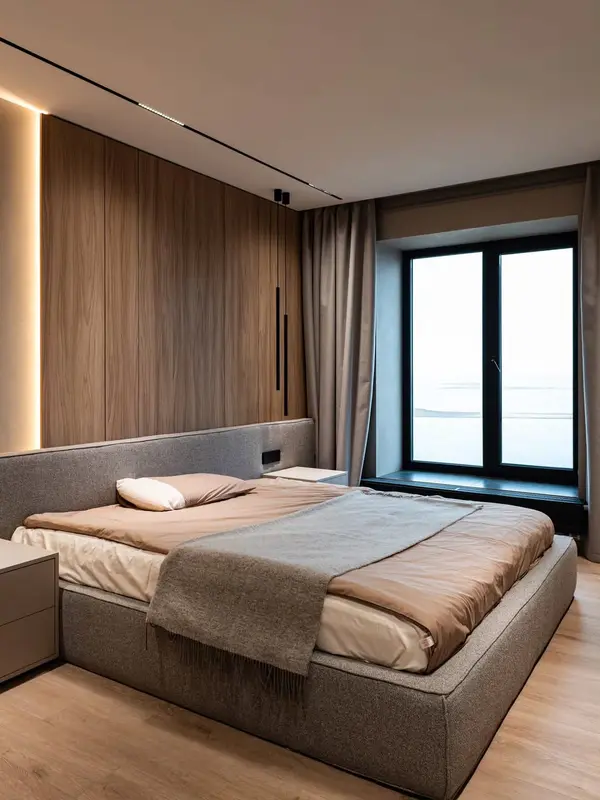
What lacquered MDF does well
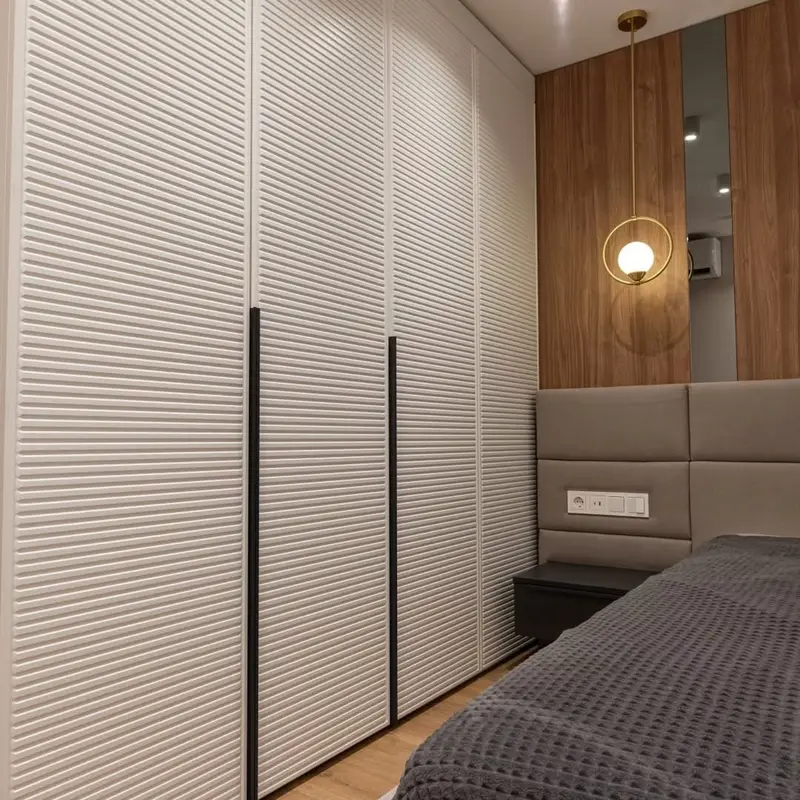
A well-prepared MDF surface allows clean colours, smooth edges and consistent shaped details. Its useful qualities include precise painted colour and smooth routed profiles.
A well-prepared MDF surface allows clean colours, smooth edges and consistent shaped details.
The right decision connects appearance with construction and maintenance. For projects in Altea, we also check the actual light, access and conditions in the room.
A well-prepared MDF surface allows clean colours, smooth edges and consistent shaped details. Its useful qualities include precise painted colour and smooth routed profiles.
We consider it for wardrobes, kitchens, living-room furniture and commercial work when its character supports the brief rather than leading it.
Edges need excellent preparation and chips show more on dark colours should be discussed before drawings or samples are approved.
Seamless-looking edges and several sheen levels can be balanced with simpler surfaces, so the finished room is coherent rather than overworked.
We compare realistic alternatives and explain what changes in construction, upkeep and price. You are not expected to specify lacquered MDF unaided.
Cleaning, light exposure, moving parts and local repair are considered so the choice still makes sense after years of use.
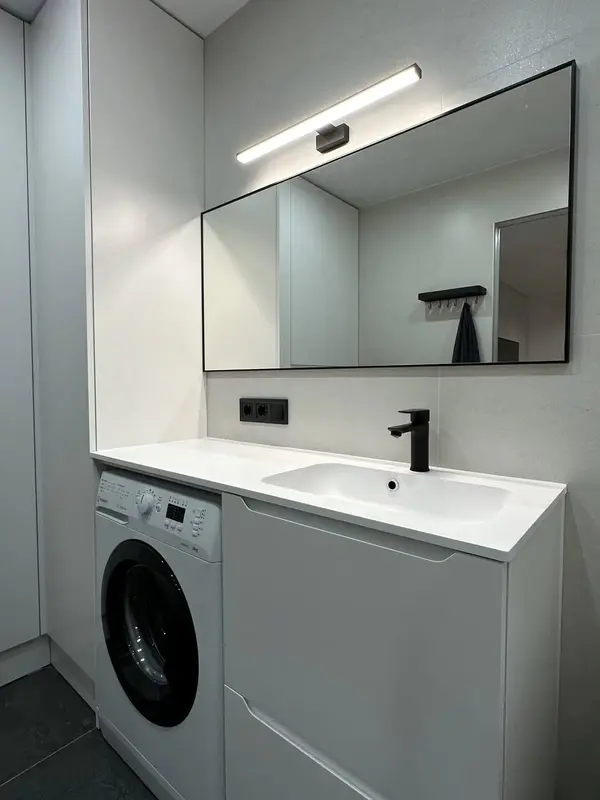
We do not begin with a catalogue code. The space and the job of the furniture determine where this approach is useful and where another solution would be more honest.
Existing floors, doors, wall colours and daylight set the context. Precise painted colour may look very different beside warm stone, cool tiles or strong coastal light.
Smooth routed profiles can be the right focus, while less visible areas use a simpler material. This often improves both performance and budget control.
Edges, handles, shadow gaps, glass, lighting and adjacent panels are resolved with the material. A finish cannot be separated from the detail that contains it.
Variation, sheen and texture are discussed before production. If natural materials are involved, we also agree what degree of variation should be expected.
The point about edges need excellent preparation is not a reason to reject the option, but it should shape where and how the approach is used.
One point frames the discussion: A well-prepared MDF surface allows clean colours, smooth edges and consistent shaped details. We then ask which part of lacquered MDF for bespoke furniture must work noticeably better on an ordinary Tuesday. That answer has more value than a long list of fashionable finishes.
Smooth routed profiles can give the scheme its identity. Used everywhere, it can also become tiring. We normally choose the few places where it has the strongest effect and let the rest of the composition settle down.
We pause when a choice depends on perfect walls, perfect lighting or unusually careful daily use. Real homes in Altea rarely offer all three, so the detail has to tolerate ordinary life.
The point about large glazed openings is not a decorative footnote. It can flatten a pale surface, sharpen a grain pattern or reveal marks that were invisible in a catalogue photograph.
Not every premium material earns its cost in every position. We reserve it for the surfaces and details where touch, light or repeated use will reveal the difference.
Fitting day should confirm earlier decisions. It should not be the first time somebody asks how smooth routed profiles meets a wall, clears a socket or passes through the building.
We do not apply a fixed “Altea style”. Instead, we use the property type, orientation and fitting route to test the fit, function and feasibility of lacquered MDF for bespoke furniture.
Stepped or sloping access can change the largest safe part size and the order in which the piece is assembled. We settle that before workshop breakdown, so visible divisions remain intentional.
The room, not the catalogue, is the colour reference. We review large glazed openings before confirming timber tone, lacquer sheen or a strongly textured surface.
Long-term use sits beside the local conditions. The decisions around sun exposure and deliveries on narrow streets are explained before they become workshop instructions.
Where colour, texture or sheen is important, a representative physical sample is the useful reference. Screens and showroom lighting can be misleading.
Its effect depends on grade, thickness, finish, cutting yield and workshop detail. We compare it against another suitable option on the same design.
Sometimes, but position and construction matter. Moisture, heat, cleaning and edge exposure must be checked before we confirm the specification.
No. It depends on the use, room conditions, desired appearance and budget. We may recommend it only for selected faces or combine it with a more practical supporting material.
Con unas fotos, medidas aproximadas y una idea de uso podemos preparar una primera orientación antes de concertar la medición.